The difference starts inside the panel
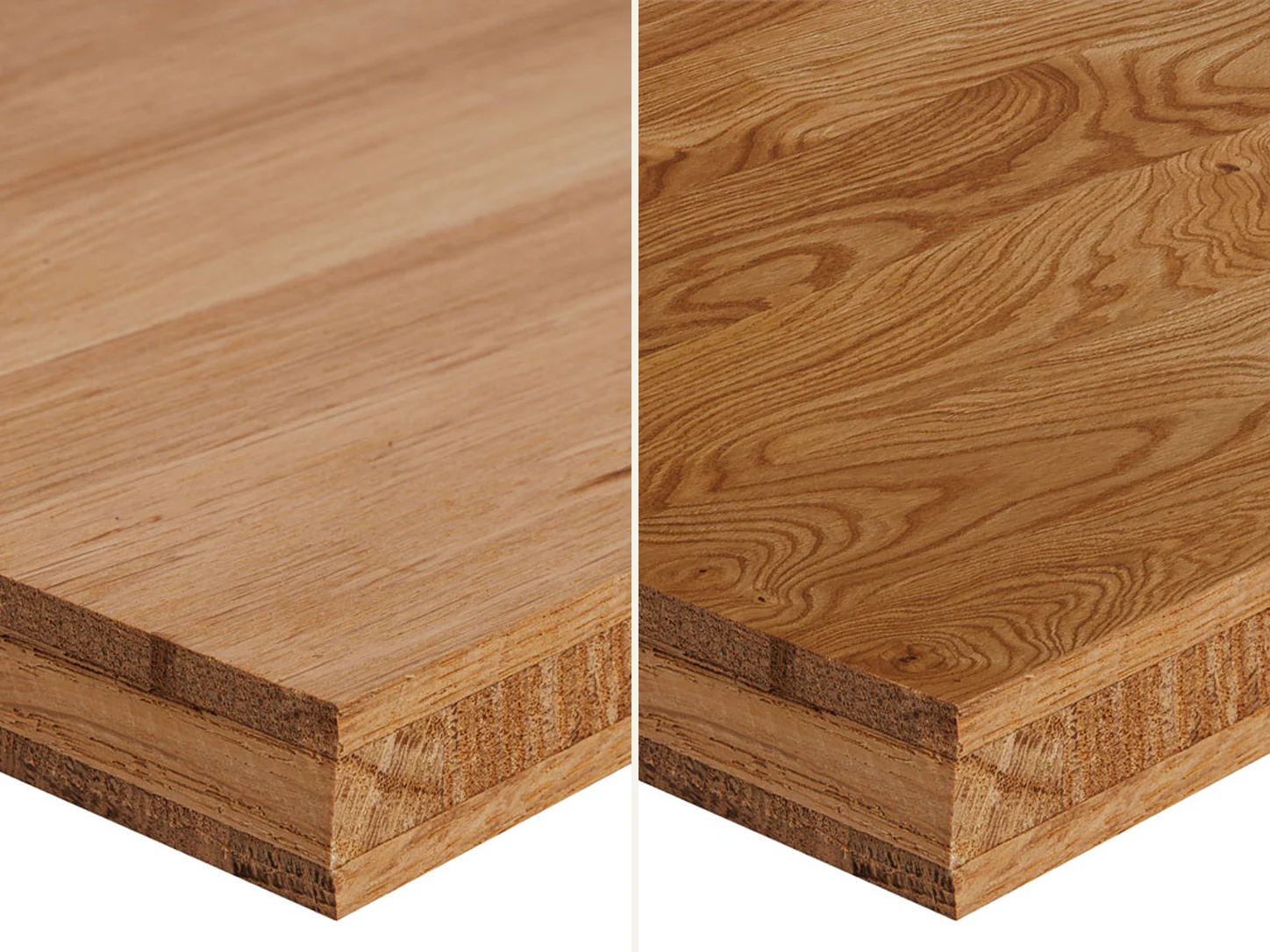
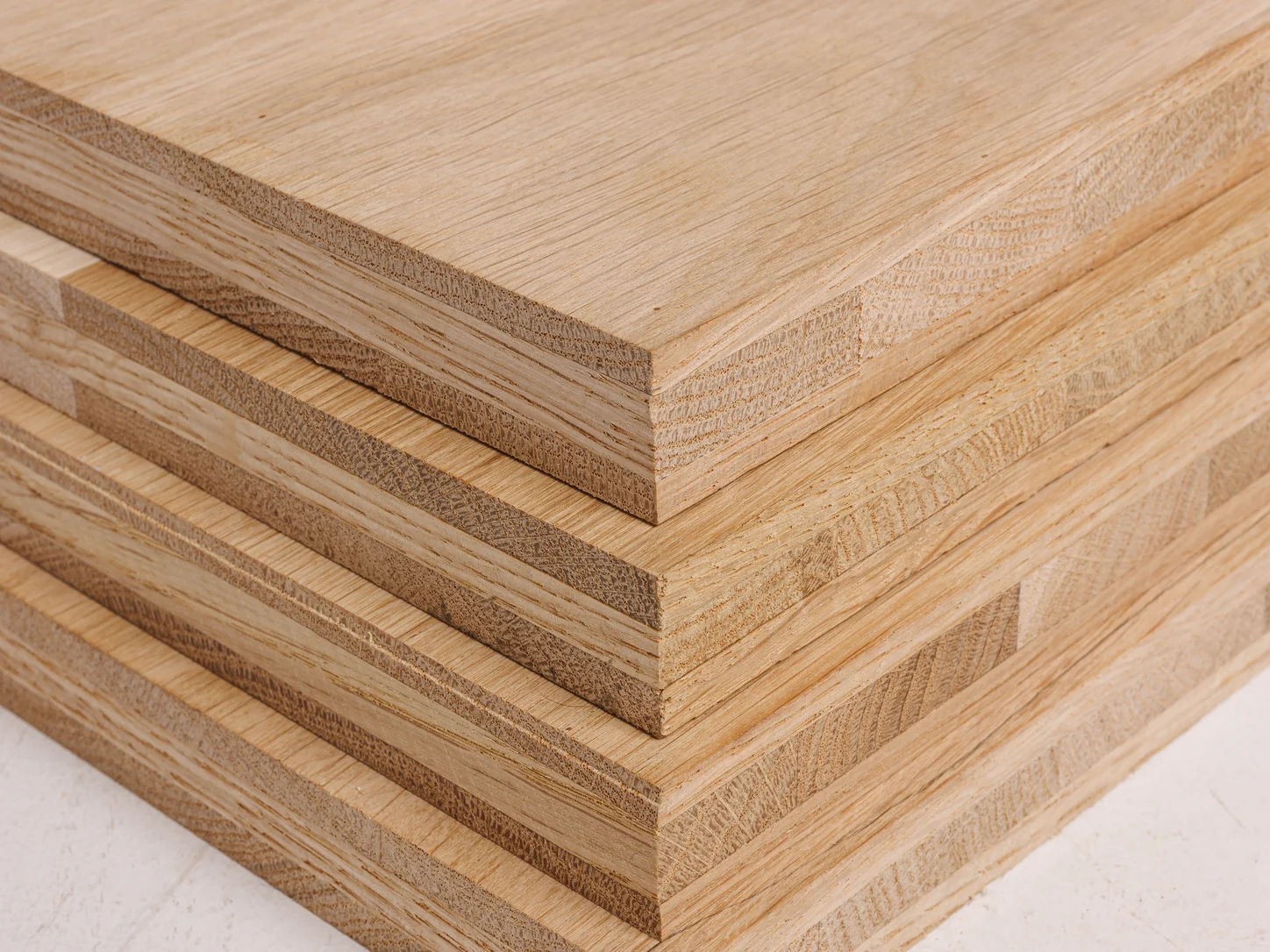
A solid oak panel is perceived as a continuous wood product assembled from oak parts. In a three-layer panel, the solid-wood layers run crosswise. This construction can help limit natural changes in the wood’s dimensions and may suit projects where stability and dimensional accuracy matter. Always check the construction and properties against the description of the specific product.
When comparing options, look beyond a single word in the name to how construction relates to use. A panel might become a cabinet front, work surface, wall element or part of a piece of furniture. Each application brings different visible edges, connections to other parts and questions about how noticeable the construction will be in the finished object.
Plan the visible sides and joints
Consider a cross-section of the finished item: which side will face out, how the end grain will be finished and how the panel will connect to neighbouring parts. In a three-layer construction, the layers may be visible at the edge. That is an expected material feature in some projects; in others, the edge needs specific design attention. The end grain of solid wood also depends on the grain direction and structure of the individual part.
If the project includes cut-outs, fixings, profiles or a transition to another material, send the supplier a detail drawing. This makes it possible to discuss whether the panel suits the intended geometry and which machining can be confirmed for this order. Do not transfer a decision from one sample or project to another without checking it.
- Show the face surfaces and edges that will remain exposed.
- Mark joints and connections to other materials.
- List visible requirements for grain and finishing separately.
Match the construction to the panel’s role
For furniture where precise joints and predictable geometry matter, a three-layer construction is often considered as one option. Solid wood may be preferred if the project calls for that particular expression of oak and the corresponding edge appearance. This is not a universal rule: the right choice depends on the product design, dimensions, installation method and conditions of use.
Ask which parameters the supplier considers important for your application and which limits should be reflected in the design. If the panel will be part of a load-bearing or complex assembly, the responsible specialist should review the design decisions; a marketing description of the material is not enough.
Decide using a sample and a detail drawing
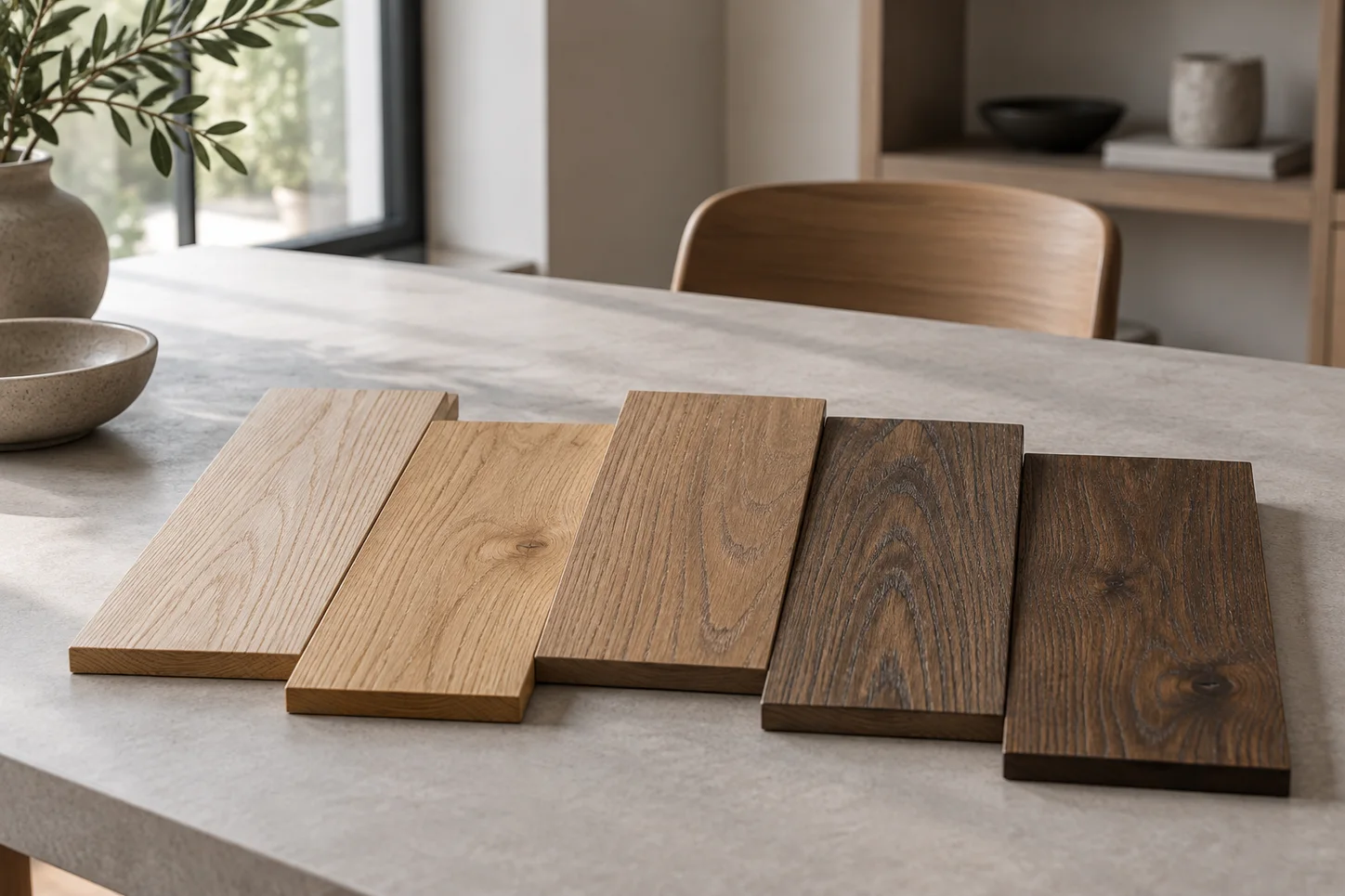
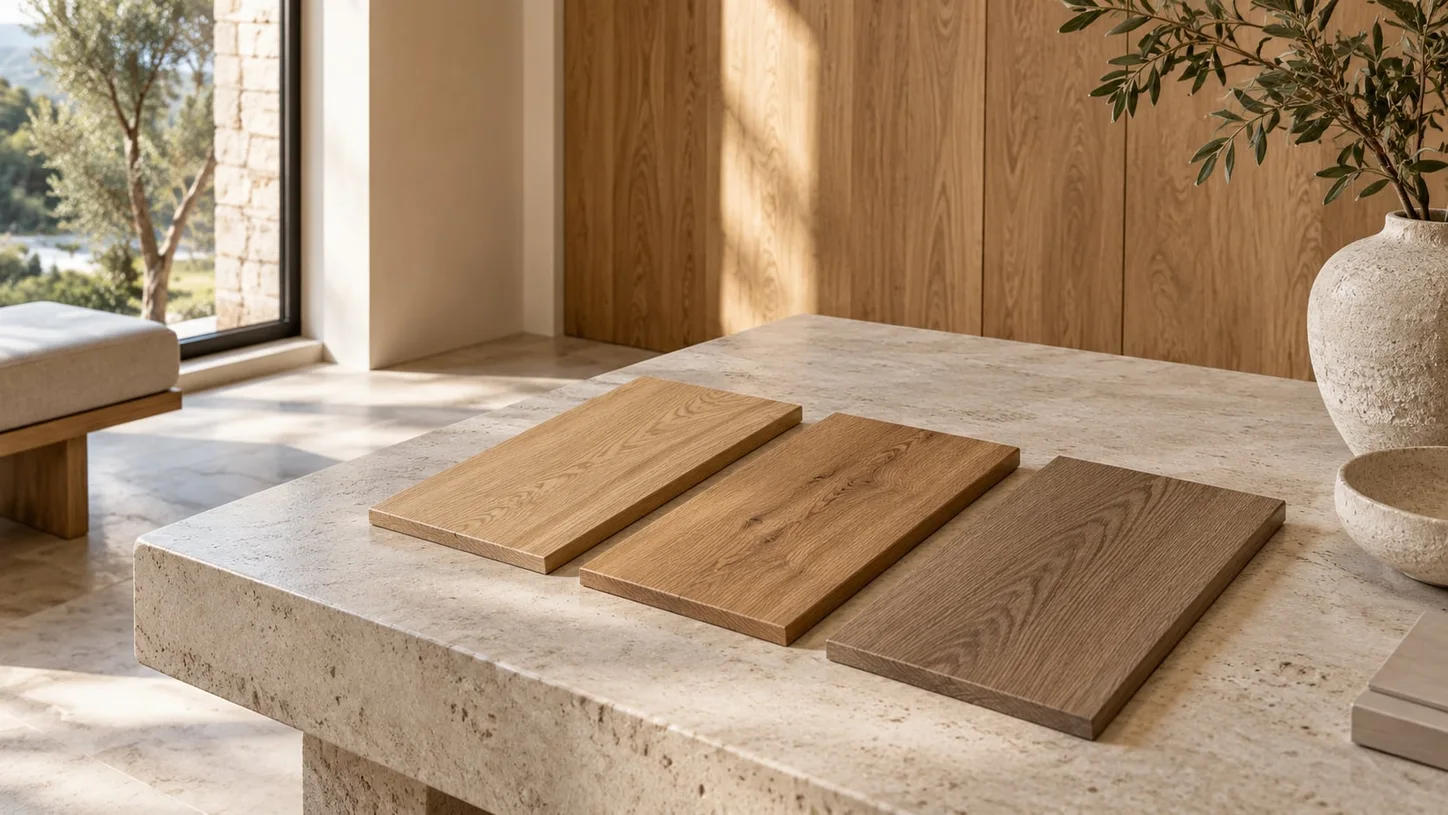
Ask for a sample of the same panel type being considered for the order and compare its face with its edge. It is best to place the sample alongside the project’s adjacent materials and assess them together. If the exact visual effect matters, agree on the grade and surface finish too: panel construction and appearance are related, but separate considerations.
Record the panel type, purpose, visible sides and project requirements in the final specification. This makes the choice clear to the designer and production team, and allows the supplier to confirm whether the specific product suits the request.