A sample is a starting point, not the whole interior
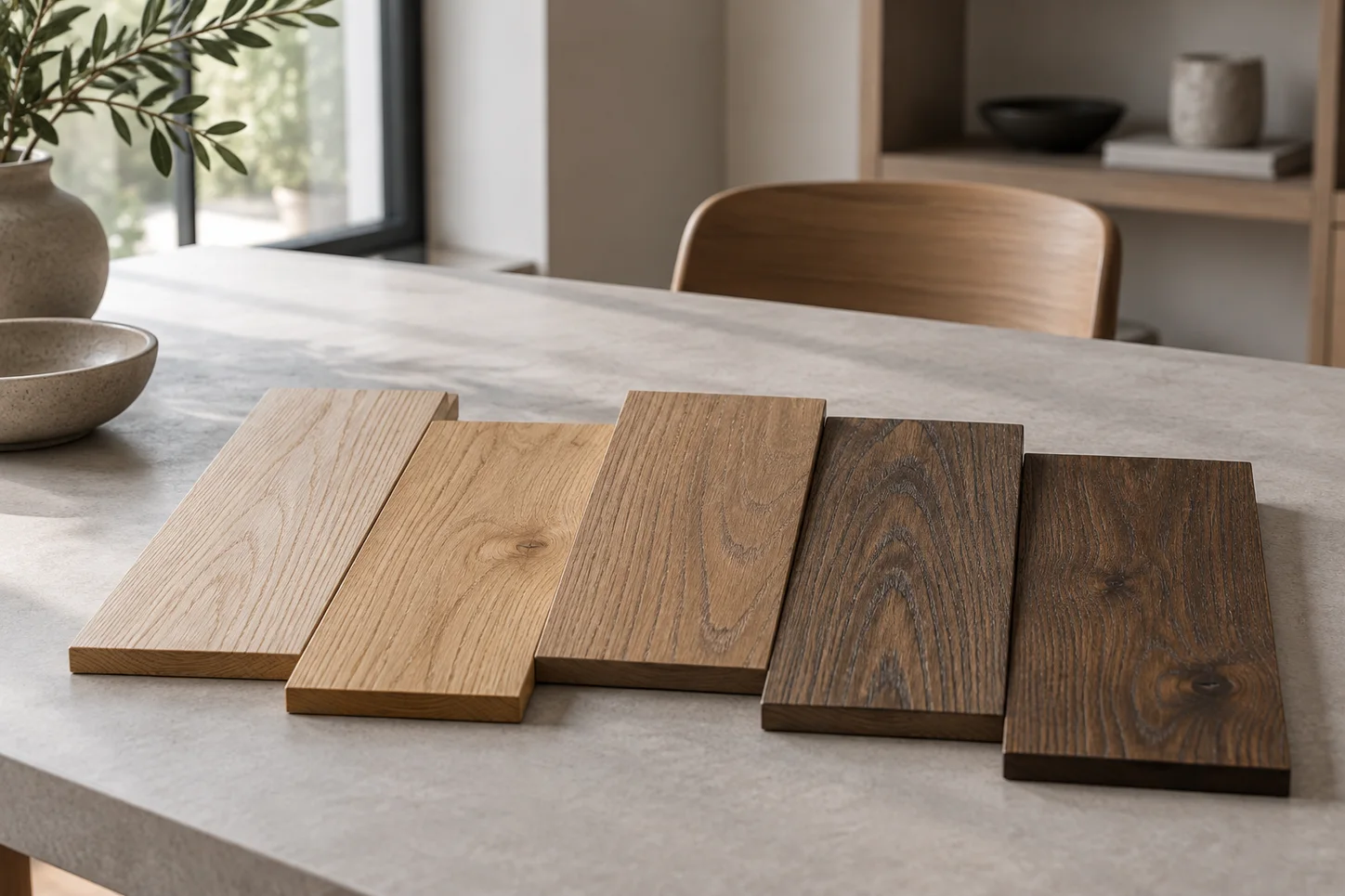
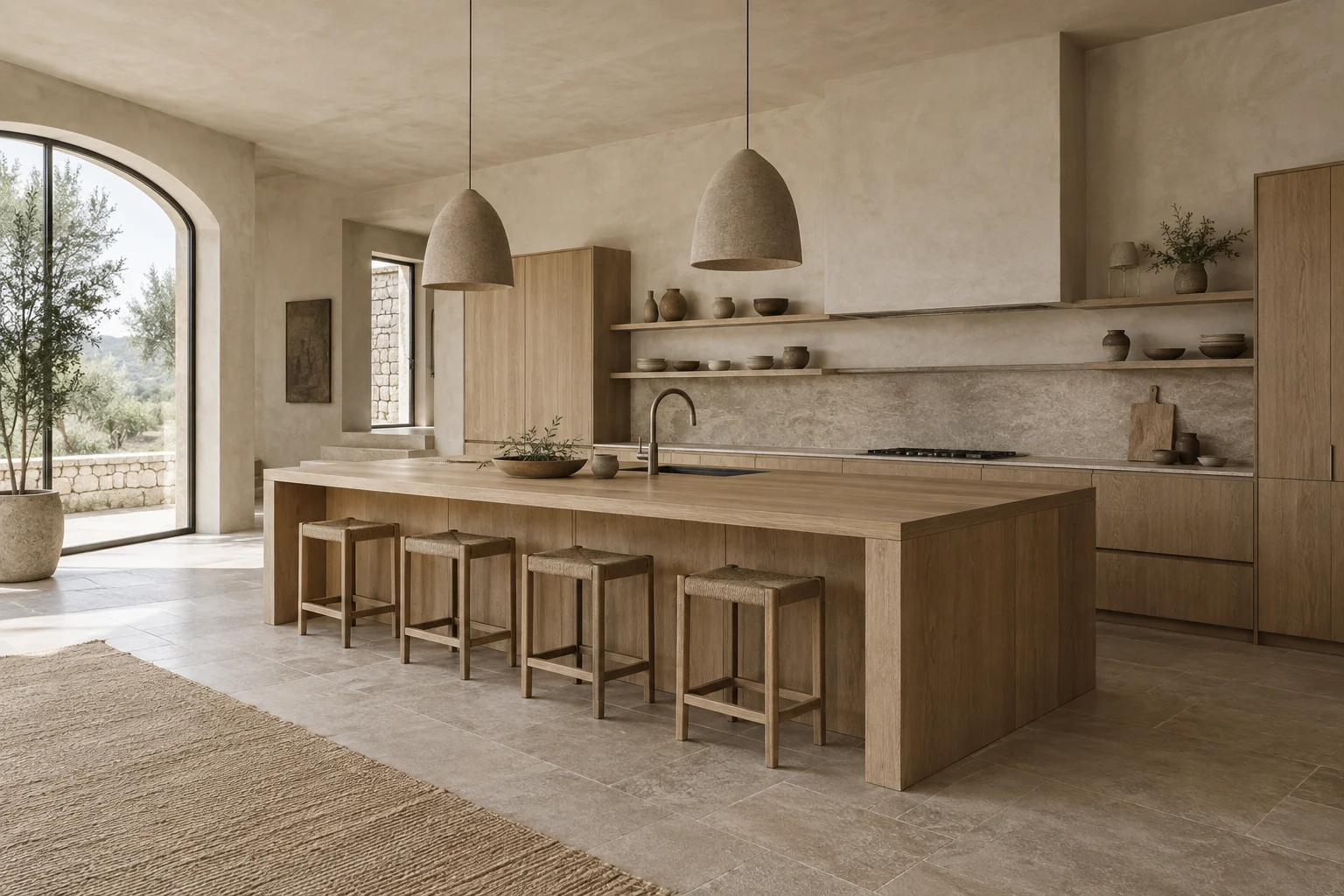
A small sample helps you assess tone, grain and the feel of the surface. In a room, however, oak is seen alongside floors, walls, metal, stone, textiles and light sources. Consider it as part of the planned palette: place the main finishes beside the sample and check whether they work well together.
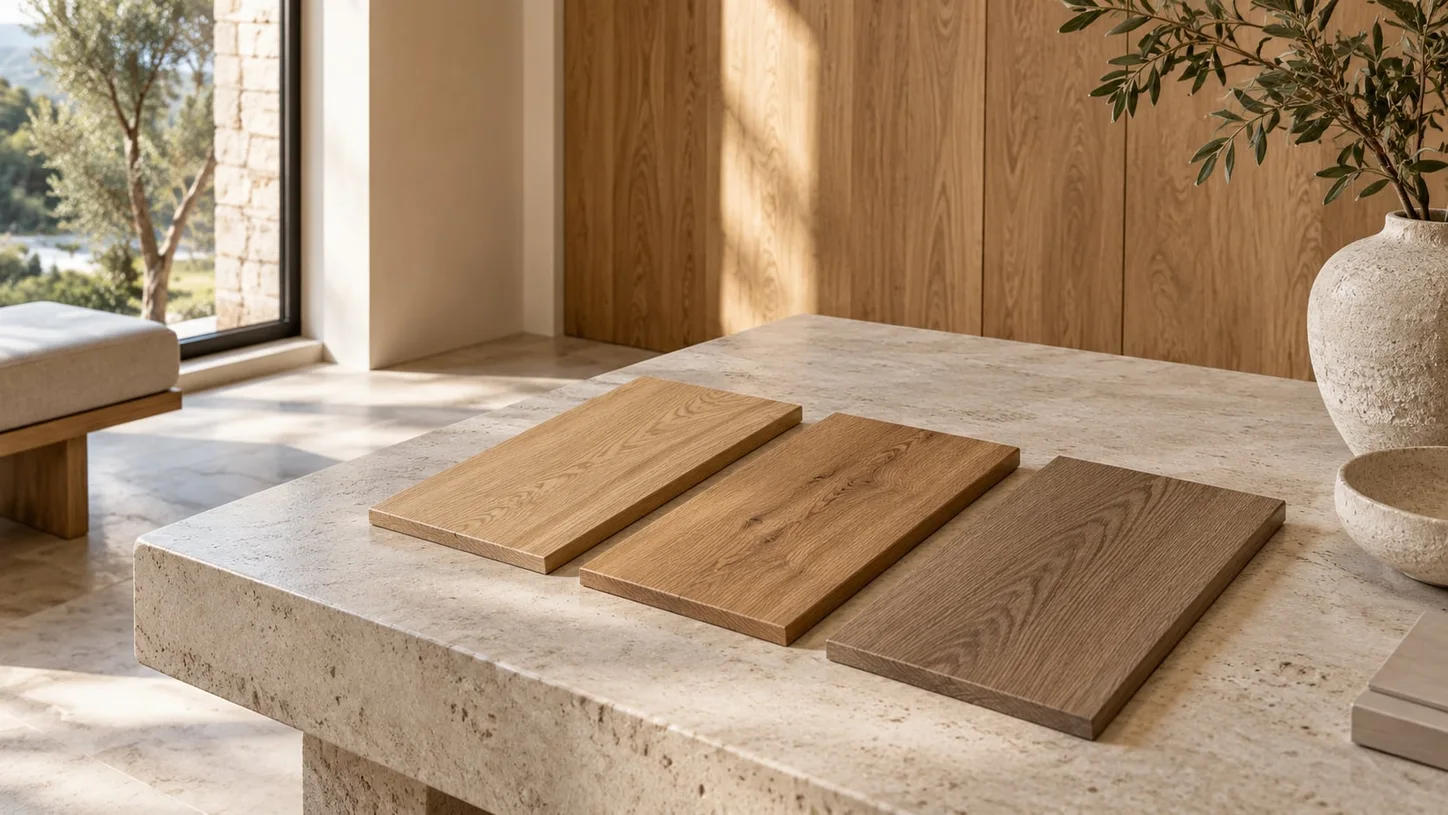
Lighting changes the visual impression of colour and texture. If possible, look at the material in the space where it will be used, or under lighting close to the project conditions. Photos help communicate a direction, but may not reproduce colour and texture accurately, so make the final decision using a physical sample.
- Place the project’s main materials and tones together.
- View the sample in daylight and under the artificial lighting planned for the project.
- Compare several samples together if oak will appear in different areas.
Decide what role oak plays in the composition
Oak can become the main accent, for example on cabinet fronts or a large surface, or connect several elements across a space. Its role determines how expressive the grain should be and where it will repeat. In the first case, assess the material on a sufficiently large surface; in the second, check how the individual parts relate to one another.
Plan the grain direction, joints and transitions between planes. Parts with similar colours can still look different if they are oriented differently or placed next to contrasting materials. A visualisation, wall elevation or simple sample collage can reveal these combinations in advance.
Agree on the grade and finish
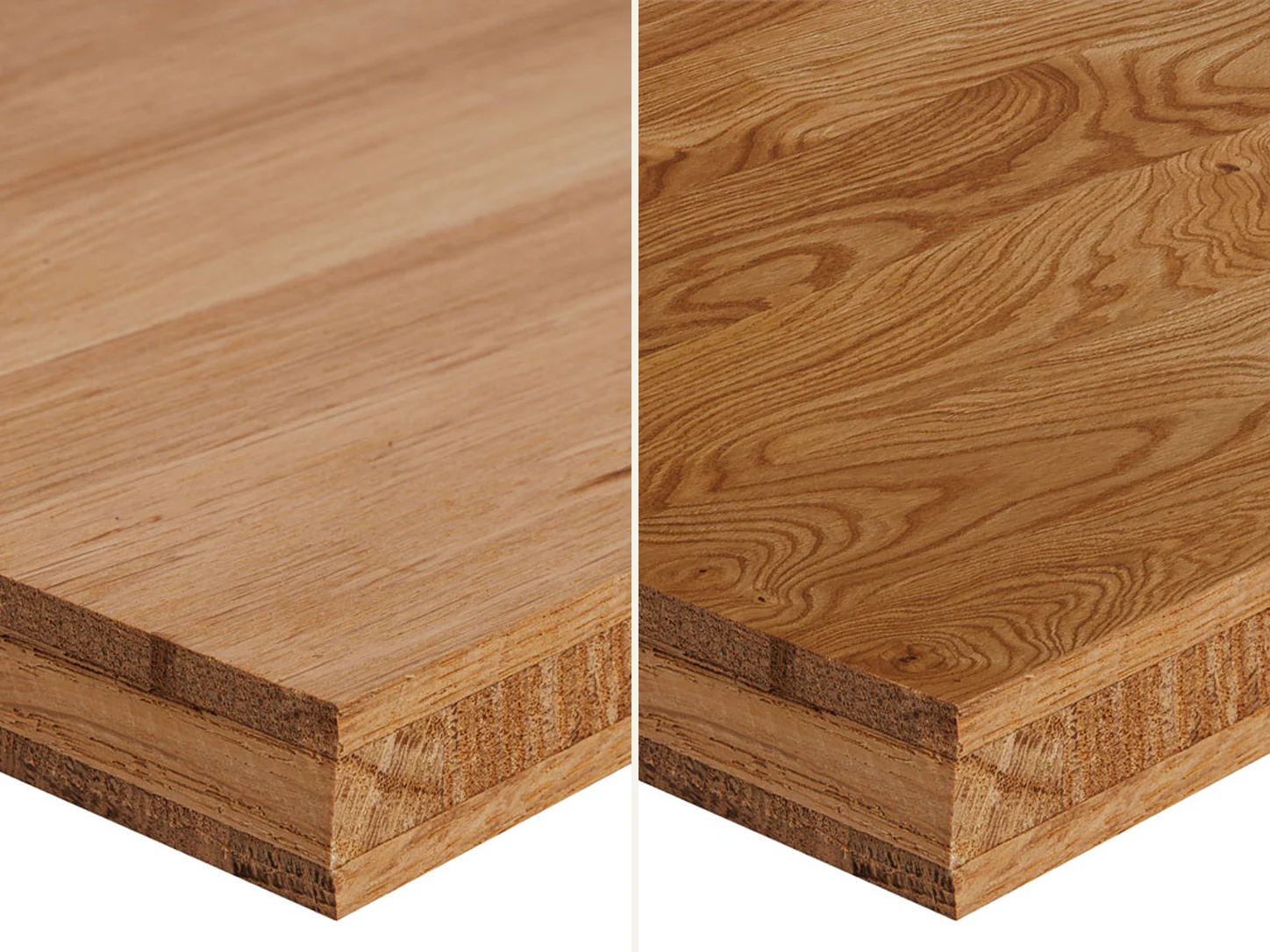
The grade affects the character of the grain, while the finish changes how the surface reflects light and looks. Discuss these decisions together: the same interior concept may look different with calmer or more expressive wood and with different finishes. Ask the supplier which options are available for the selected product and specific order.
If the project includes several product types, check whether they can be coordinated as a group using samples. Do not assume that the same colour or grade name will automatically make different materials look identical. Compare physical samples and agree on the range of variation that is acceptable in the space.
Record the composition in the project documents
Keep the approved sample or its precise description with the specification, and note where it will be used and which finishes will be adjacent. Add important visual principles, such as grain direction or tone continuity across a group of elements, to the drawings and order notes. This makes the design intent clear to everyone involved, not only its author.
Before ordering, check that the selected oak suits the scale of the surfaces and the neighbouring materials, both on screen and when viewed together. If the decision is not final, mark it as an open question. This helps coordinate the composition without promising that the natural grain will match perfectly.