Describe the result you want
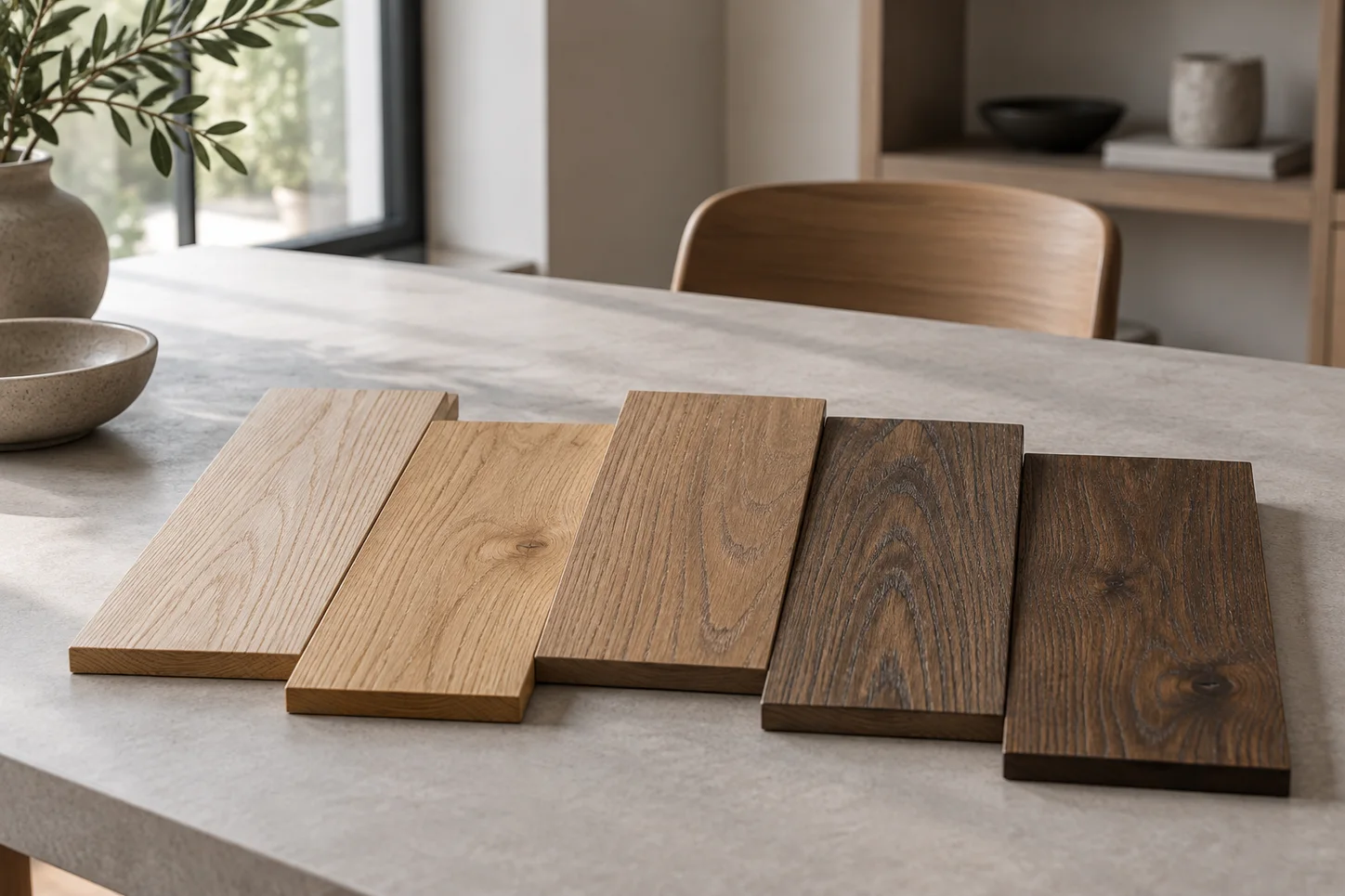
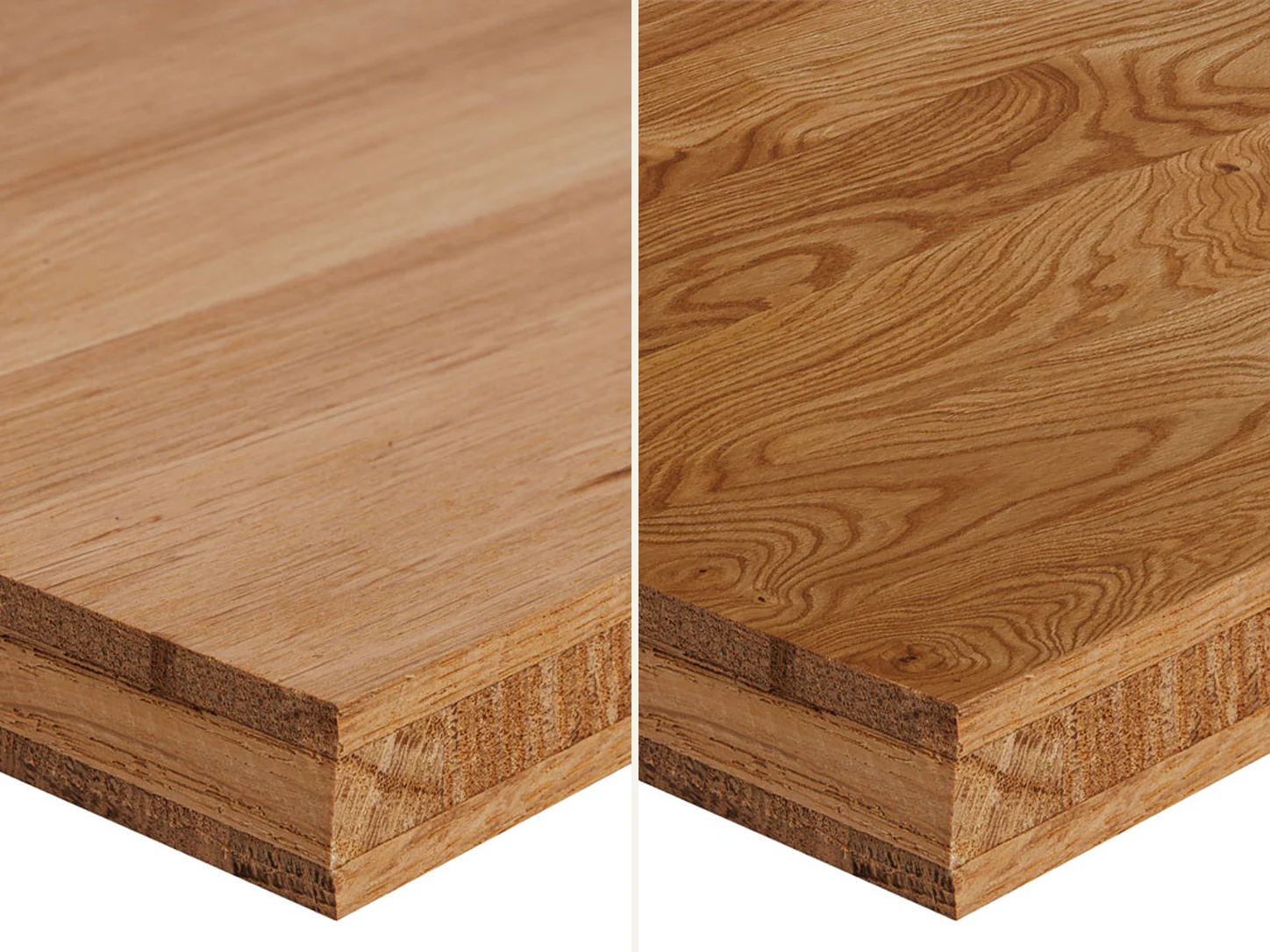
The phrase “natural oak” leaves room for many different expectations. One project may suit a calm grain and an even feel, while another calls for more pronounced relief and expressive texture. Make the discussion concrete by breaking the visual preference into parts: tone, grain visibility, tactile feel and the way the surface reflects light.
A reference helps show a direction, but should be treated as an illustration of an idea. Clarify what matters in it: lightness, contrast, degree of sheen or the character of the finish. If one image combines several qualities, name the priorities separately so the supplier understands which result matters most to the project.
- What overall tone is needed alongside the other materials?
- How visible should the grain and relief be?
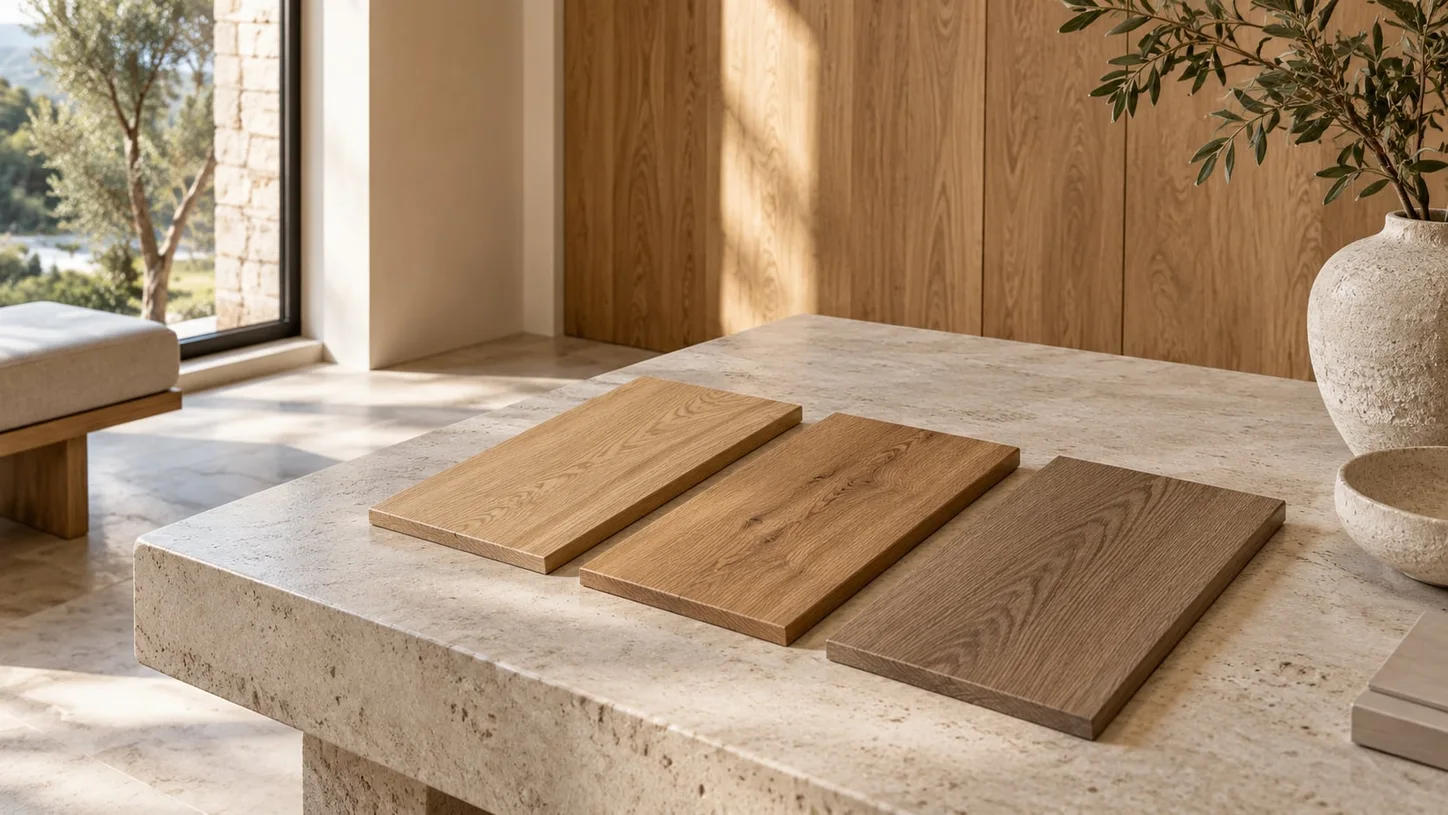
- How should the surface look in direct and side lighting?
Separate colour, texture and sheen
Colour and finishing are related, but they are not interchangeable. A finish can emphasise the grain or change how the surface looks, while lighting can make a tone seem warmer, cooler, softer or more contrasting. When comparing samples, consider not only the finish name but also how it appears on the selected wood species and grade.
Discuss what surface preparation comes before the final finish and which options are available for the product. Do not infer the final result from an unfinished blank if the order includes further processing. The supplier should confirm the specific operations and whether they suit the product.
Check the sample at the right scale
A small sample is useful for an initial choice, but a large surface can look different as the grain repeats and light spreads across it. If the finish defines the appearance of a prominent plane, request a sample large enough for a meaningful review and ask how representative it is of the future batch. Compare samples in the same lighting and beside the project finishes.
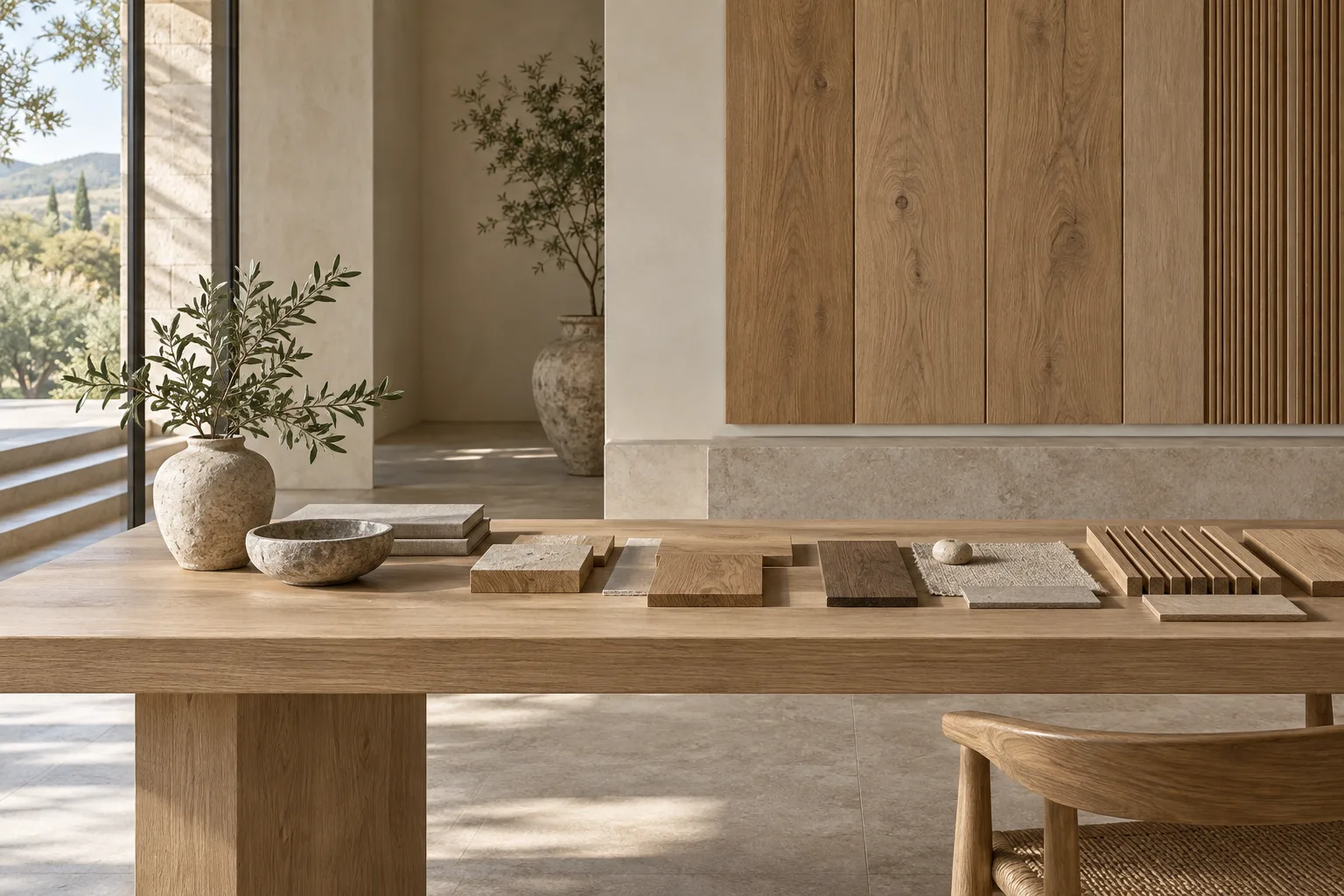
If the surface will be used on several components, place the samples alongside each type of neighbouring material. Record what you notice: which option seems too contrasting, which feels suitable, and under what lighting the difference is easiest to see. This turns a subjective choice into a clear decision made together.
Record the sample and open decisions
Label the approved sample and link it to the product, grade and surface description. If the choice was made using a reference, keep it with a note explaining which sample qualities are requirements and which are only guidance. Record unresolved questions separately so they are not lost when the order is handed to production.
Before work begins, check that everyone understands the selected result in the same way. Agree how to handle a deviation if the material in the specific order looks noticeably different from the reference. This helps manage expectations while respecting the natural character of the wood.