Define what consistency means for the project
For one series, consistency may mean a similar overall tone; for another, it may mean a coordinated grain character or no abrupt visual transitions between adjoining elements. First decide what matters to the end client and where differences will be most noticeable. Without that definition, different people may interpret “matching oak” in different ways.
Group the products by what will be seen together: parts of one cabinet front, components of one item, or several items in a shared space. Note which surfaces will sit next to one another and be viewed at the same time. This map helps identify where the material needs especially careful coordination and where a general approach to grading and finishing is enough.
- Which parts will sit next to one another in the finished interior?
- What matters more: a similar tone, grain pattern or finish?
- Where will natural variation have little effect on the overall impression?
Use a shared visual reference
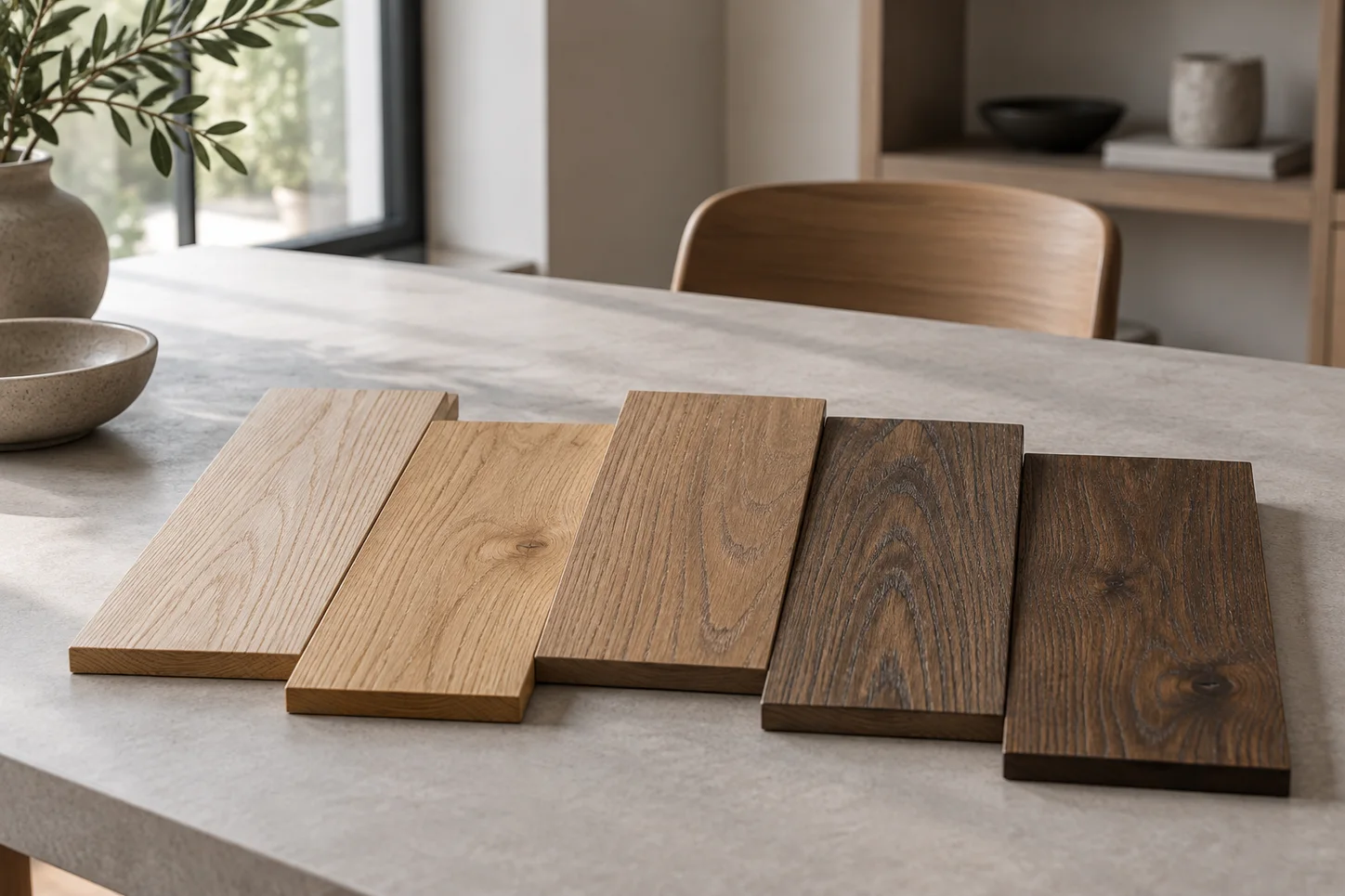
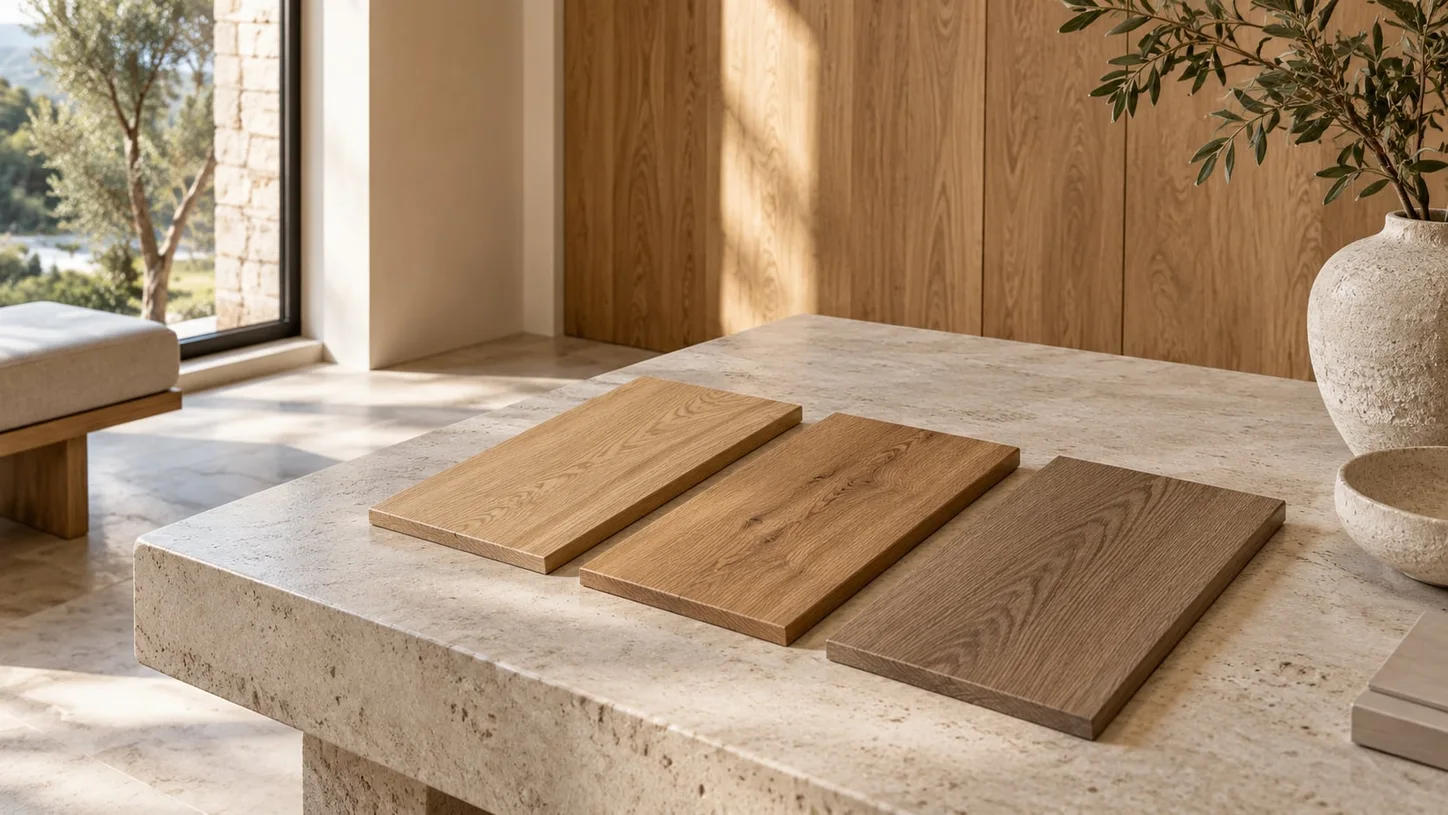
Choose a sample that represents the desired character of the material, and relate it to the grading and finish. If the order includes different parts or will be delivered in stages, list the groups covered by the reference. If useful, attach a parts layout and mark the visible faces so everyone knows which elements are being compared.
A sample cannot guarantee an exact match for every natural feature of oak. Its purpose is to give everyone a clear basis for assessment. Ask the supplier how the material for the order will be confirmed and which variations are expected for the selected option.
Plan the series as a set of related parts
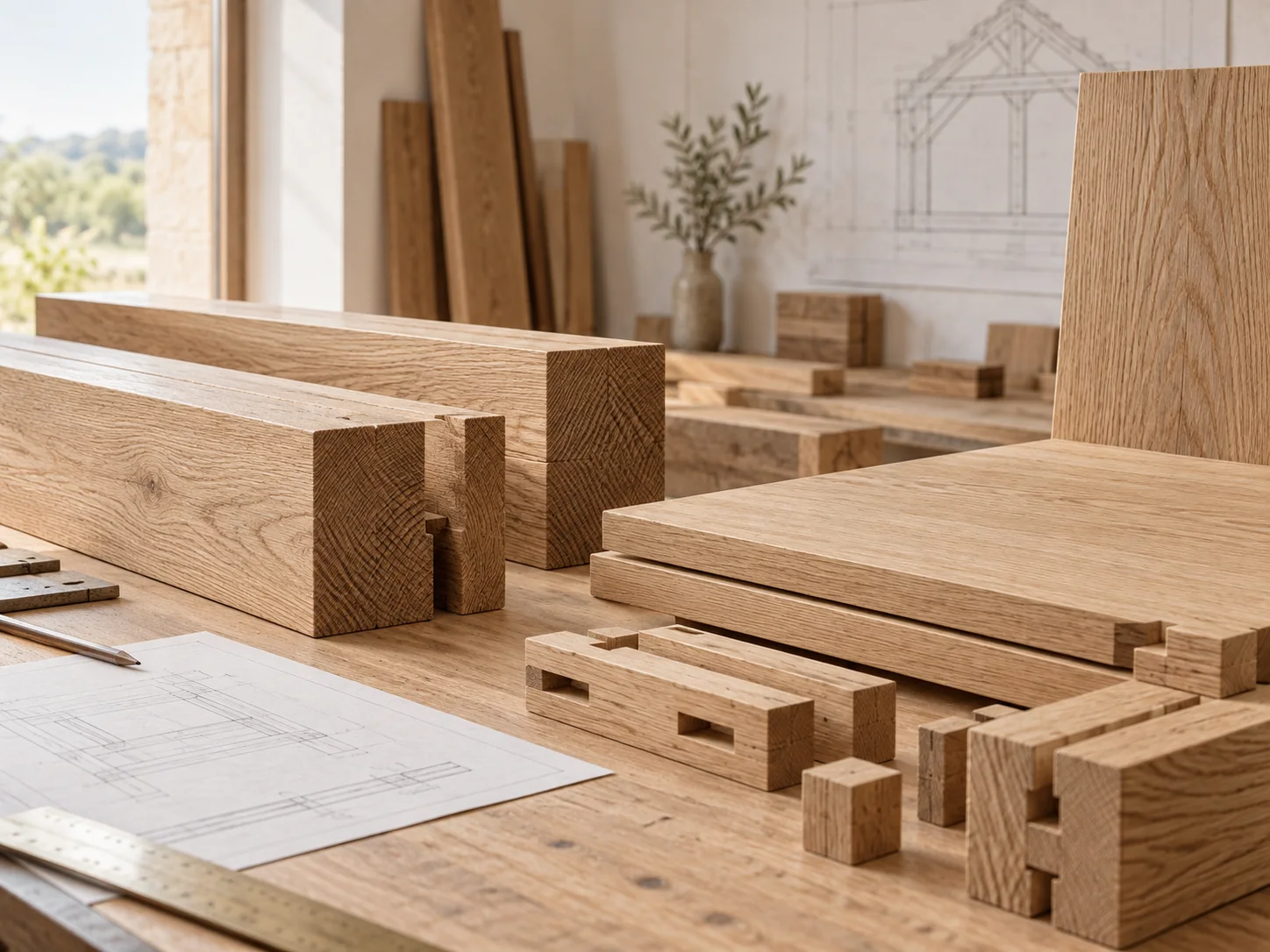
When components share a visual rhythm, it is more useful to discuss them as a group than in isolation. Send the parts list, project layout and drawings; for prominent cabinet fronts or large surfaces, show how the parts will be arranged. This makes it possible to raise grading, grain direction and appearance coordination early.
If products will be made in stages or material will be reordered, tell the supplier before approval. Ask which details from the previous order would help assess the new material, and keep the specification ID, sample description and agreed notes. Do not assume that an earlier order automatically sets the visual standard for the next one.
Agree on what to do if a difference is noticeable
Before confirming the order, agree what happens if the material sample differs from the initial expectation: who decides, which photos or samples are needed, and when further processing should pause while awaiting a response. A clear process agreed in advance reduces the chance that an aesthetic issue will surface only after assembly or installation.
Add approved requirements to the current specification and make sure everyone on the project receives it. Record any concerns raised during inspection and discuss them before work continues. This helps keep the series visually coherent within the agreed direction without promising that a natural material will be identical throughout.